 Tools
Tools Tools
Tools


Olczak, Susie  ORCID: https://orcid.org/0000-0001-9615-5514
(2019)
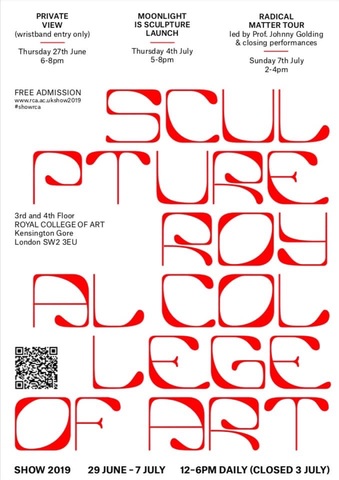
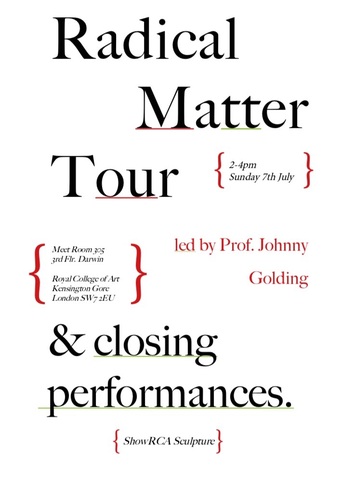
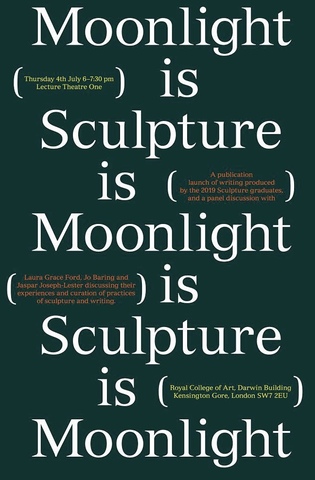
Chain Reaction: A body of work by Susie Olczak.
[Show/Exhibition]
ORCID: https://orcid.org/0000-0001-9615-5514
(2019)
Chain Reaction: A body of work by Susie Olczak.
[Show/Exhibition]
![[thumbnail of © Susie Olczak]](https://eprints.glos.ac.uk/style/images/fileicons/text.png "© Susie Olczak") |
Text (© Susie Olczak)
Chain Reaction.docx - Published Version Download (2MB) |
|
Text (© Susie Olczak)
RCA Degree Show, 2019..docx - Published Version Download (1MB) |
![[thumbnail of UNADJUSTEDNONRAW_thumb_3732.jpg]](https://eprints.glos.ac.uk/16045/3/UNADJUSTEDNONRAW_thumb_3732.jpg "UNADJUSTEDNONRAW_thumb_3732.jpg")  Preview |
Image
UNADJUSTEDNONRAW_thumb_3732.jpg - Supplemental Material Download (117kB) | Preview |
![[thumbnail of UNADJUSTEDNONRAW_thumb_3908.jpg]](https://eprints.glos.ac.uk/16045/4/UNADJUSTEDNONRAW_thumb_3908.jpg "UNADJUSTEDNONRAW_thumb_3908.jpg")  Preview |
Image
UNADJUSTEDNONRAW_thumb_3908.jpg - Supplemental Material Download (87kB) | Preview |
![[thumbnail of 9S3vd7eLQuC4TNmu2do1+Q_thumb_384c.jpg]](https://eprints.glos.ac.uk/16045/5/9S3vd7eLQuC4TNmu2do1%2BQ_thumb_384c.jpg "9S3vd7eLQuC4TNmu2do1+Q_thumb_384c.jpg")  Preview |
Image
9S3vd7eLQuC4TNmu2do1+Q_thumb_384c.jpg - Supplemental Material Download (180kB) | Preview |
Abstract
This body of work made for the MA show at the Royal College of Art is a chain reaction of experimental making. Works from this body of work have then been shown at the Royal Overseas League, The Wilson Museum Cheltenham, The Undercroft Norwich, The Cello Factory, London with the Ingram Collection, The Royal Overseas League, CAN Art at Trinity Gallery, London and are in the Fora London public Collection with Subject Matter Art. The works are made through a process of constructing, taking apart and reconfiguring. It uses the idea of the artist model and materials in a studio or an architectural practice to speak of both the calm and chaos of London as a city. The sculptures layer up optical print and become a blur. This is an experience reminiscent of when people move through cities or the grids of digital space- being lost in the pixels. It aims to playfully encourage the viewer to question what is real and what is fake, commenting on how so often now in society it is difficult to discern reality. The forms give a sense of being able to be reconfigured in order to offer the viewer, the hope of control over the spaces around them. On sections of the works, silicone and paint form expressive layers, they obscure the view further. This is intended to ask the audience to reconsider how they see and experience the world. Questioning their focus on the slick nature of the shiny screen-like transparent forms and the printed media they are often exposed to. The silicone is a nod to plastic use and the duality between this material being seductive yet sinister. Photographs of foliage creep into parts of the work, suggesting growth and movement and the way that in cities foliage is intertwined with geometry. The sculptures become both chaotic and playful and essentially, they are a way of collaging pieces of the world together. Focusing in on the details and framed fragments, they push the viewer’s perception of scale and aim to be bold and dynamic works.
| Item Type: | Show/Exhibition |
|---|---|
| Related URLs: | |
| Subjects: | N Fine Arts > NB Sculpture |
| Divisions: | Schools and Research Institutes > School of Arts, Culture and Environment |
| Depositing User: | Susie Olczak |
| Date Deposited: | 05 Aug 2026 10:41 |
| Last Modified: | 05 Aug 2026 10:41 |
| URI: | https://eprints.glos.ac.uk/id/eprint/16045 |
University Staff: Request a correction | Repository Editors: Update this record